Water running down a wall during heavy rain is rarely just an annoyance. It can stain brickwork, soak timber, damage render and leave puddles close to your foundations. A search for gutter replacement Darlington often begins after a visible problem, but worn gutters can cause damage long before they finally fail.
Replacing a gutter system is a practical way to protect the parts of your home that are expensive and disruptive to repair. The right solution is not always a complete replacement, however. A clear inspection should establish whether a repair will provide a dependable result or whether the system has reached the end of its useful life.
When Gutter Replacement in Darlington Is the Better Option
A loose bracket, a slipped joint or a small crack can sometimes be repaired. If the rest of the guttering is sound, a targeted repair may be the sensible and more cost-effective choice. Replacement becomes the better option when faults are widespread, recurring or caused by ageing materials rather than one isolated issue.
Look closely after rainfall. Overflowing water, drips from several joints and water tracking behind the gutter are all signs that need attention. Gutters should carry rainwater cleanly towards the downpipes, without spilling over the front edge or against the property.
Replacement is often worth considering when you notice several of the following problems:
- Cracks, splits, holes or brittle sections in the guttering
- Gutters that sag, bow or pull away from the fascia board
- Repeated leaks from joints despite previous repairs
- Rust, corrosion or flaking on older metal systems
- Downpipes that are loose, damaged or unable to clear water properly
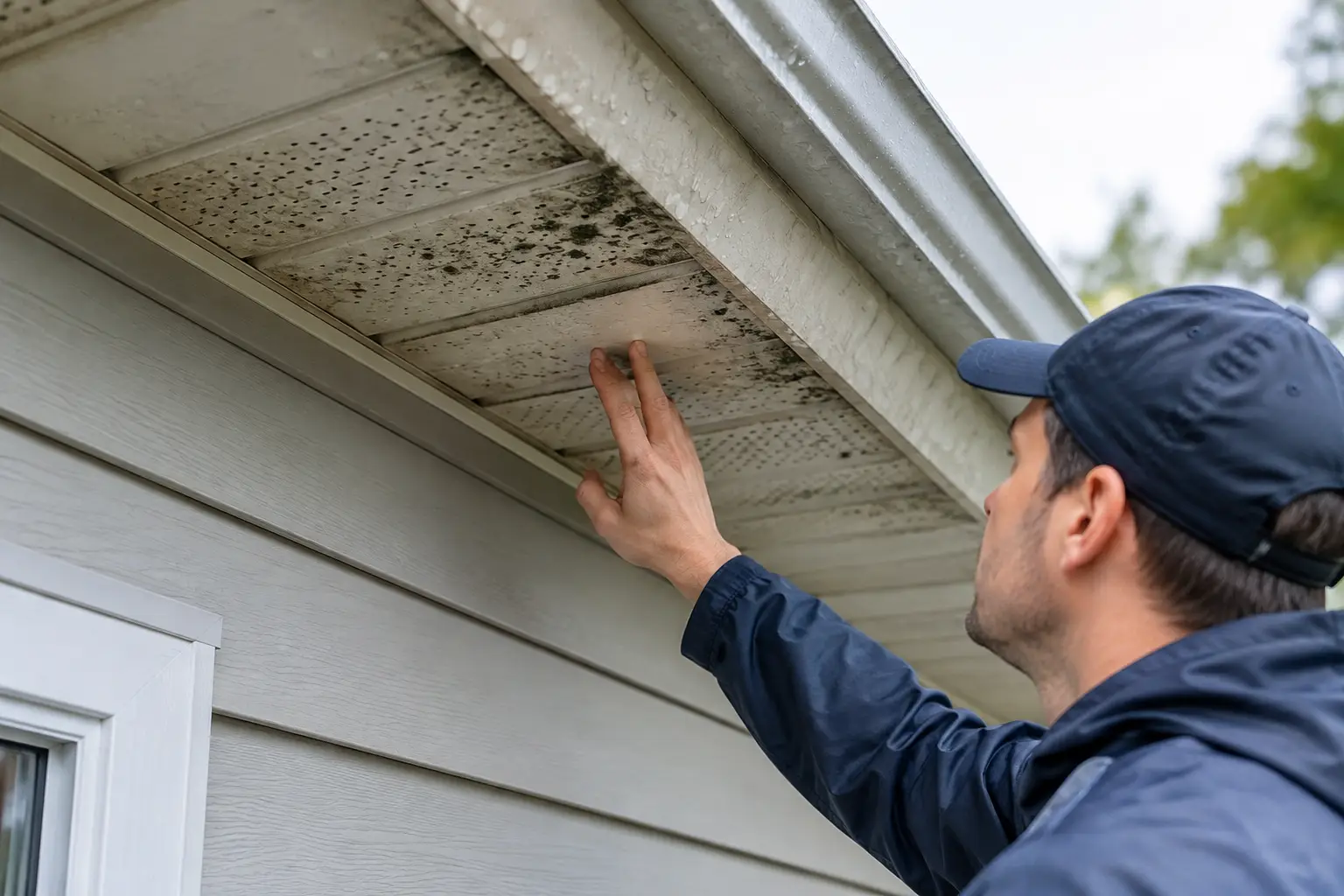
The condition of the roofline matters too. Fascias and soffits provide the fixing point and finished edge for the gutter system. If fascia boards are rotten, soft or damaged by long-term moisture, fitting new gutters alone may not solve the underlying problem. Dealing with guttering and roofline work together can prevent a second round of scaffolding or access work later on.
Why Failed Gutters Should Not Be Left Until Later
Guttering has a simple job, but it deals with a large volume of water. A typical roof sheds rain across a broad area, and during a North East downpour that water needs a clear route away from the building. Even a short period of overflow can leave damp patches around windows, doors and wall surfaces.
Over time, water running down external walls can contribute to damaged pointing, staining and moisture ingress. At ground level, it may wash away soil, splash against masonry or overload gullies. Where water is repeatedly discharged beside the property rather than through a downpipe, it can also affect paths, driveways and the area around foundations.
Blocked gutters are a common cause of overflow, particularly near mature trees. Yet clearing debris will not put right guttering that is poorly aligned, undersized, split or fixed to failing boards. A professional assessment separates a maintenance issue from a system that needs renewing.
Choosing the Right Gutter Material
Most domestic properties use uPVC guttering. It is durable, low-maintenance, available in several profiles and colours, and well suited to many homes. Black, white and grey are common choices, while brown can work well with certain roofline finishes. A good installation is about more than colour: the profile and capacity must suit the roof and the expected water flow.
Half-round gutters are widely used and can be a good fit for smaller roof areas. Square-line systems offer a more angular appearance and can carry greater volumes of water in some specifications. Ogee profiles have a more decorative shape and may be chosen to complement traditional properties. The best option depends on the size and style of the building, the roof pitch and the amount of rainwater the system must handle.
Cast iron or aluminium may be appropriate where appearance, conservation requirements or longevity are particular priorities. These options can offer a more traditional finish, but they usually involve a higher initial cost and different maintenance considerations. For many homeowners, quality uPVC provides the right balance of appearance, performance and value.
Downpipes should be considered at the same time as the gutters. A sound gutter will still overflow if there are too few outlets, if the downpipes are obstructed or if rainwater cannot drain away effectively at ground level. The complete route of the water matters.
What a Proper Gutter Replacement Should Include
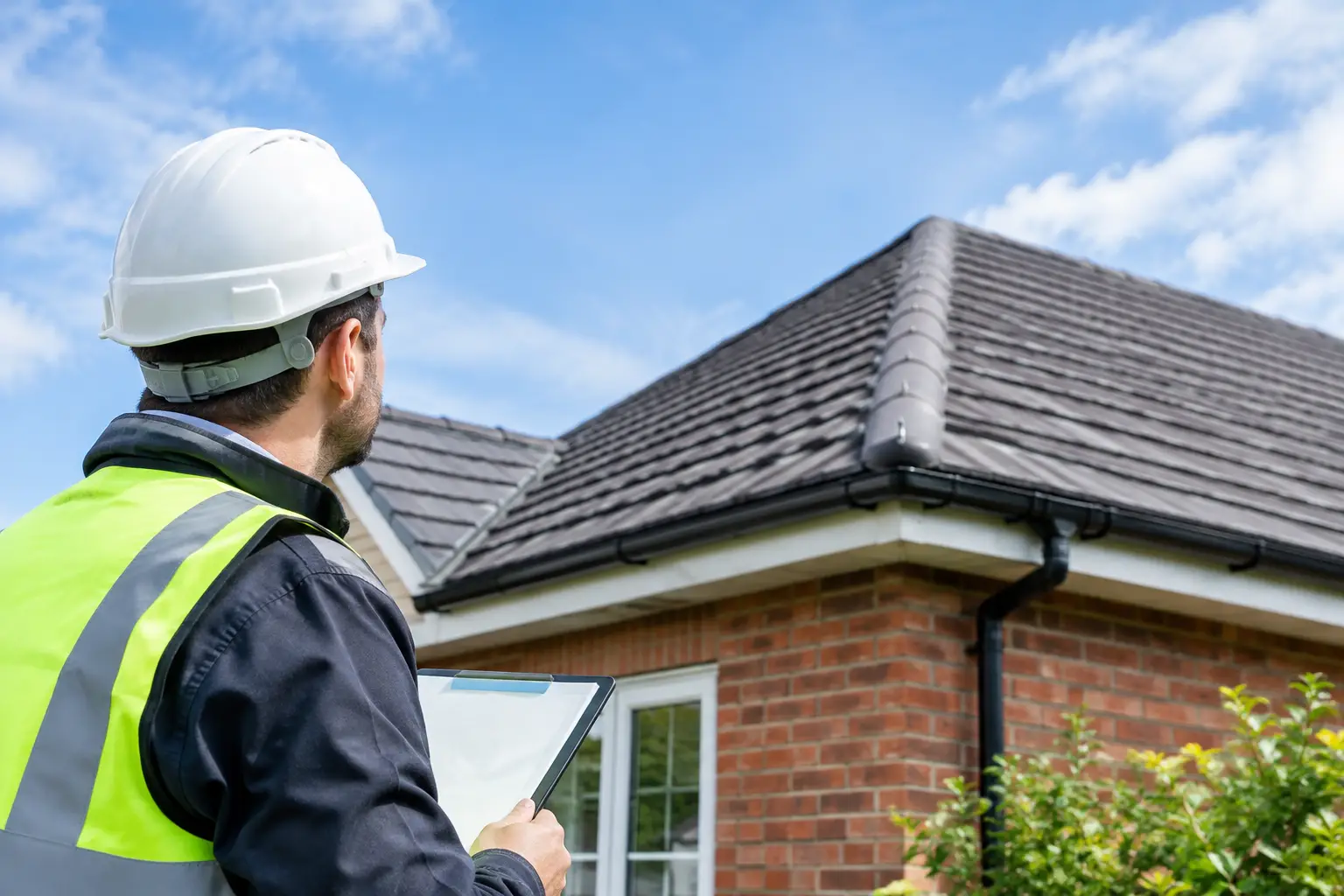
Good gutter replacement starts with a close look at the existing system and the surrounding roofline. The installer should identify where water is escaping, inspect the fascia condition and check whether the fall of the gutters is correct. Gutters need a gradual slope towards each outlet. If they are level, or slope in the wrong direction, water can sit in the system and eventually spill over.
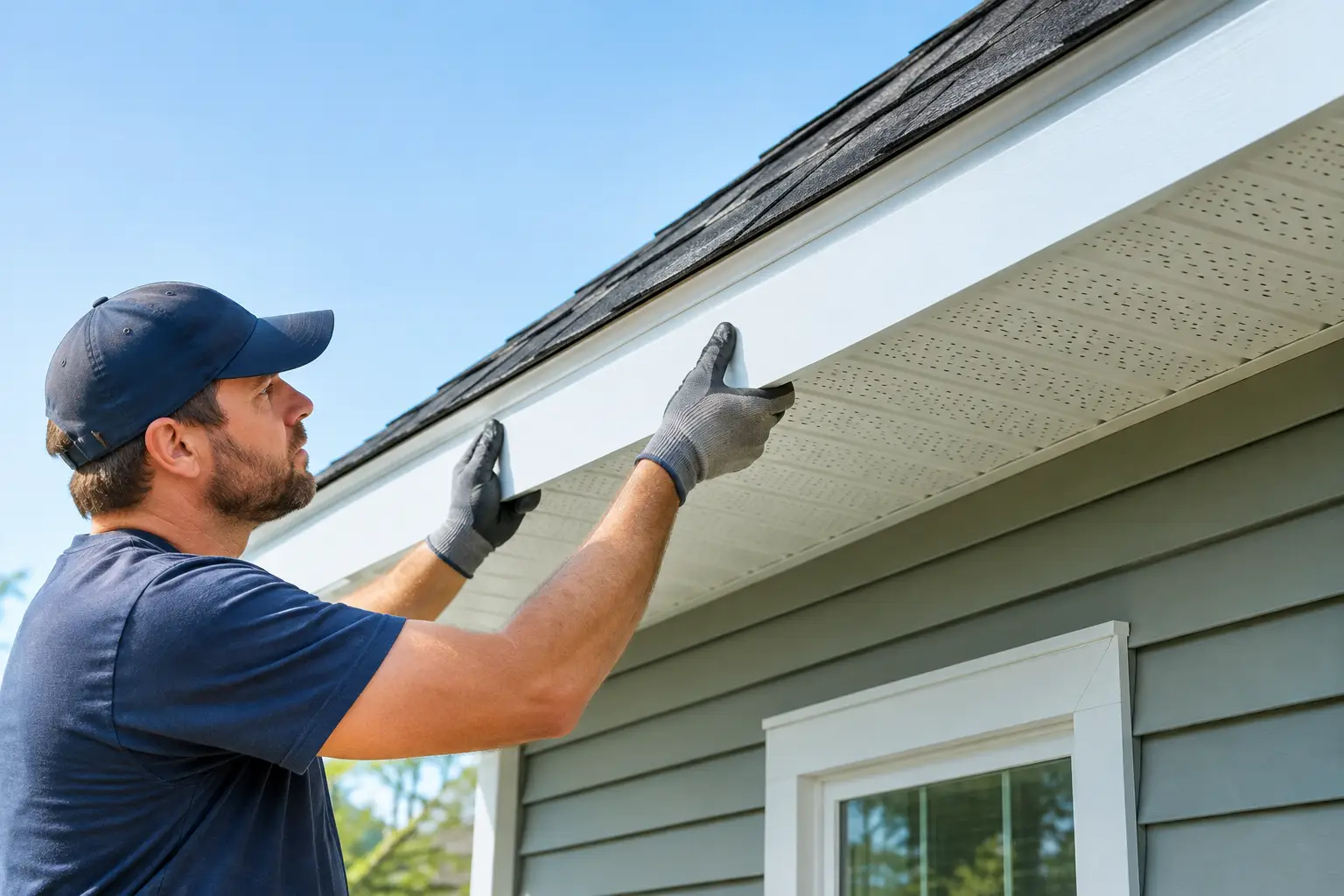
Old guttering, brackets and failed fittings should be removed carefully. The fascia boards behind them need to be checked before new brackets are fitted. New guttering fixed to weak or damaged timber may look tidy initially, but it is unlikely to remain secure.
Each section must be measured and joined properly, with expansion and contraction allowed for where required. This is particularly relevant for uPVC, which moves slightly with changes in temperature. Brackets should be spaced correctly and securely fixed, not simply attached wherever the old fittings happened to be.
The system should then be tested or checked to make sure water will run towards the downpipes without pooling. The finished work should leave the property tidy, with old materials removed and any issues found during the work explained clearly. This attention to detail is what helps new guttering perform through repeated wet weather, rather than only looking smart on the day it is installed.
Replacement, Repair or Cleaning: Making a Sensible Decision
There is no benefit in replacing serviceable guttering simply because it is not new. If a gutter is blocked with moss and leaves but otherwise secure, cleaning and routine maintenance may be all that is needed. Likewise, a single failed seal or bracket can often be repaired without replacing the whole run.
On the other hand, repeated patch repairs can become poor value if the guttering is old, brittle or leaking at multiple points. It is reasonable to ask whether a repair is likely to last, whether matching materials are available and whether the fascia boards will support further repairs. A straightforward quotation should set out what work is recommended and why.
For landlords and owners of several properties, planned replacement can also be easier to manage than waiting for a failure during severe weather. It gives you time to choose the material and arrange work around tenants or other maintenance needs.
Keeping New Gutters Working Well
New gutters need little day-to-day attention, but they should not be forgotten. Check them periodically, especially after autumn leaf fall and after storms. Look for standing water, plant growth, overflowing corners and signs that brackets have moved. Keep gullies and the bottom of downpipes clear so rainwater has somewhere to go.
Avoid leaning ladders directly against gutters, as this can distort the profile or loosen the fixings. If access is difficult or you suspect a problem at roof level, it is safer to arrange an inspection than to risk working at height yourself.
Gutter replacement is most effective when it is treated as part of the wider roofline, not as an isolated strip of plastic around the eaves. Masterhouse Services can inspect the condition of your gutters, downpipes, fascias and soffits, then provide a free, no-obligation quotation for clearly defined work.
A properly fitted system should quietly do its job every time it rains. Acting before leaks become damp, rot or masonry damage gives you more choice, less disruption and better protection for your home.